Research reference · Suggested protocols

Suggested dosage protocols.

Educational reference for research-context dosing of every peptide in the Black Ice catalog. Doses shown below are aggregated from peer-reviewed literature, FDA drug labels (where applicable), and established research-supplier dosing pages. They are not treatment recommendations and are provided for laboratory and educational reference only.

Research use only · Not medical advice This page compiles publicly available research-context dosage protocols for educational and reference purposes. Products offered by Black Ice Peptides are sold strictly for in-vitro laboratory research and development. Nothing here should be interpreted as a prescription, treatment recommendation, or medical guidance. Any clinical or therapeutic use must be discussed with a licensed physician or qualified healthcare professional.
Dual Regulator research vial
GIP / GLP-1

Dual Regulator

Typical dose2.5–15 mg
FrequencyOnce weekly
RouteSubcutaneous
CycleTitrated q4wk over 12–20+ weeks (2.5→5→7.5→10→12.5→15 mg)
NotesSURMOUNT-1 dose-escalation protocol; start low to reduce GI side effects
Triple G Hard R research vial
GGG tri-agonist

Triple G Hard R

Typical dose2–12 mg
FrequencyOnce every 5–7 days (preferably every 5 days)
RouteSubcutaneous
CycleTitrated q4wk: 2mg (wk1-4) → 4mg (wk5-8) → 8mg (wk9-12) → 12mg (wk13+)
Time off between cycles4–5 weeks off between cycles
NotesPhase 2 trial protocol (Jastreboff et al. 2023); max studied dose 12mg/week
Systemic clearanceApproximately 4–5 weeks (~30 days) for the peptide to fully clear from the biological system.
BPC + TB Blend research vial
Blend · Repair

BPC + TB Blend

Typical dose250–500 mcg BPC-157 + 250 mcg–2.5 mg TB-500 (pre-blend: ~0.5–1 mg total daily)
FrequencyDaily (BPC-157); 2x/week (TB-500 loading), then 1–2x/week maintenance
RouteSubcutaneous
Cycle6–12 weeks total (4wk loading + 4-8wk maintenance), 2–4 week off-cycle
NotesPre-blended 1:1 vials (e.g., 10mg+10mg) dosed daily; or run on separate schedules
KLOW Blend research vial
Blend

KLOW Blend

Typical dose2–4 mg total blend per injection (from 80mg vial: 50mg GHK-Cu/10mg BPC-157/10mg TB-500/10mg KPV)
FrequencyDaily, 5x/week loading (wk1-4), 3x/week maintenance (wk5-12)
RouteSubcutaneous
Cycle8–12 weeks on, 4–8 weeks off
NotesPer 10-unit (4mg) dose: ~2.5mg GHK-Cu + 500mcg each BPC-157/TB-500/KPV
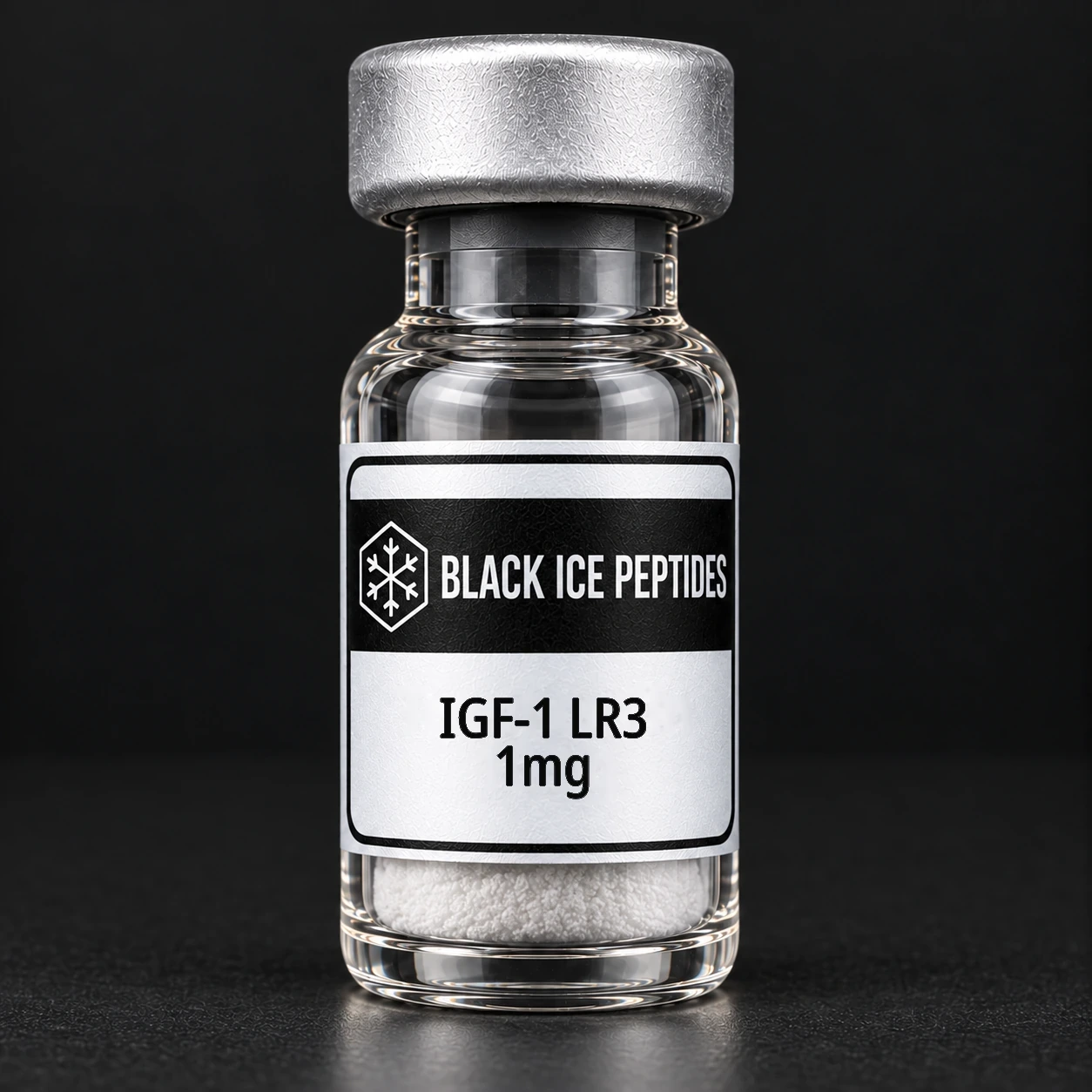
IGF-1 LR3 research vial
GH / IGF-1 axis

IGF-1 LR3

Typical dose20–50 mcg per injection
Frequency1x/day, post-workout or morning
RouteSubcutaneous (bilateral, rotate sites)
Cycle4–6 weeks on, 4–6 weeks off; do not run beyond 6 weeks continuous
NotesLong-acting Arg³ + N-terminal-extended IGF-1 analog with a ~20–30 hour half-life. Reconstitute with acetic acid or BAC water; unlike native IGF-1, LR3 resists binding-protein sequestration.
Tesamorelin research vial
GHRH analog

Tesamorelin

FDA-labeled dosesOriginal EGRIFTA: 2 mg once daily (original label); EGRIFTA SV: 1.4 mg once daily (SV label); EGRIFTA WR: 1.28 mg once daily (WR label).
Formulation mattersThese doses refer to specific prescription formulations; EGRIFTA SV and WR are not substitutable (prescribing information). They are not dosing instructions for Black Ice research vials, which are not for human administration.
Approved use & routeSubcutaneous prescription treatment for excess abdominal fat in adults with HIV-associated lipodystrophy; not indicated for general weight-loss management (WR label).
CyclingThe cited labels specify daily use, not planned five-on/two-off cycling. Studies included 26-week treatment and extensions to 52 weeks; these durations are not a recommended self-directed cycle (clinical studies and dosing).
1 mg/day, 5 on / 2 off: unvalidated protocolThe proposed schedule of 1 mg subcutaneously on five days each week, followed by two days off, is not an FDA-approved regimen and is not established as safe or effective by the cited prescribing information (FDA-approved WR labeling). It is included for comparison, not as a treatment recommendation. Discuss prescription dosing and any treatment changes with a licensed clinician.
IGF-1 & glucose monitoringPrescribing information calls for IGF-1 monitoring during therapy and consideration of discontinuation for persistent elevations, such as above 3 standard-deviation scores, particularly when benefit is limited. Glucose status should be assessed before treatment and periodically during therapy because glucose intolerance or diabetes can occur (warnings, sections 5.2 and 5.4). A clinician must interpret results and decide whether treatment remains appropriate.
Semax research vial
Neuro / cognitive

Semax

Typical dose300–1200 mcg/day (300–600mcg intranasal start; 200–400mcg subQ start)
Frequency1–2x/day (AM and early afternoon, 8-12hrs apart)
RouteIntranasal (primary) or subcutaneous
Cycle7–14 day titration then continued use; typically 2–4 week courses
NotesACTH(4-10) analog developed in Russia; nootropic via BDNF/dopamine pathways
NAD+ research vial
Cellular energy

NAD+

Typical dose25–100 mg (subQ research dosing); 250–500 mg (IV clinic infusion)
FrequencyDaily or every other day (subQ); 1-2x/week loading then monthly (IV)
RouteSubcutaneous or intravenous
CycleNo established cycle length; often continuous or 4–8 week blocks
NotesStart at low end (25mg subQ) due to injection-site pain; NAD+ precursor for cellular metabolism research
Selank research vial
Neuro / cognitive

Selank

Typical dose200–400 mcg (intranasal, 2-3x/day); 100–300 mcg (subQ, 1-2x/day)
Frequency2–3x/day (intranasal) or 1–2x/day (subQ)
RouteIntranasal (primary) or subcutaneous
Cycle14–21 day courses; 14 days on/14 off pattern common
NotesRussian anxiolytic heptapeptide (Tuftsin analog); total daily dose 1.5-2.25mg in Russian trials
DSIP research vial
Sleep · Delta wave

DSIP

Typical dose100–300 mcg per injection
FrequencyNightly, 30–60 min before bed
RouteSubcutaneous
Cycle4–8 weeks, then reassess
NotesDelta-Sleep-Inducing Peptide; historical human research used 25–300 mcg/kg IV, but modern PT-style subcutaneous protocols report 100–300 mcg total per dose. Start low, titrate up if needed.
Kisspeptin research vial
Reproductive endocrine

Kisspeptin

Typical dose100–200 mcg per injection (research standard); 1 μg/kg (~100 mcg) IV bolus in clinical studies
Frequency2–3x per week (standard); every other day or daily in some protocols. Chronic daily use may cause tachyphylaxis (reduced receptor responsiveness).
RouteSubcutaneous (research standard); IV bolus in clinical studies
Cycle4–12 weeks on, followed by a break of equal length before starting again
TimingMorning administration within 90 min of waking to mimic natural pulsatile hormone signaling, or pre-sleep to align with overnight recovery. Injection absorption is food-independent — can be taken with or without food.
NotesChan/Seminara dose-response (KP-10 0.01–1 μg/kg IV) shows peak LH at ~1 μg/kg; KP-54 IVF triggers use 1.6–12.8 nmol/kg SC. 2–3x/week dosing helps prevent receptor fatigue.
Melanotan-1 research vial
Cosmetic (pigment)

Melanotan-1

Typical dose16 mg implant (or 0.08–0.16 mg/kg/day)
FrequencyEvery 60 days (implant)
RouteSubcutaneous bioresorbable implant
Cycle3–5 implants per treatment year
NotesScenesse EPP pivotal trial (Langendonk 2015 NEJM): 16 mg implants every 60 days for 6–9 months; injectable Phase I dosing was 0.08–0.16 mg/kg SC daily × 10 days.
Pinealon research vial
Cognitive bioregulator Preclinical

Pinealon

Typical dose5–10 mg (SC) or 10–20 mg (oral)
FrequencyOnce daily
RouteSubcutaneous, intranasal, or oral capsule
Cycle10–20 day course, repeat every 4–6 months
NotesKhavinson EDR tripeptide (Glu-Asp-Arg); dosing mirrors epithalamin-family 10-day courses. Human data limited to Russian bioregulator trials — treat as experimental.
VIP research vial
Vasoactive peptide

VIP

Typical dose100–200 μg/day inhaled (or 50–150 pmol/kg/hr IV)
Frequency4 inhalations/day (or continuous IV)
RouteInhaled aerosol; IV in acute-care trials
Cycle12 weeks (inhaled PH trial)
NotesPetkov 2003 pulmonary-hypertension protocol: 200 μg/day aerosolized VIP for 12 weeks; NCT06729606 aviptadil IV escalates 50→150 pmol/kg/hr over 3 days.